
ORGANIZATION:
WITH THE SUPPORT OF:








2nd Edition of the International Conference on Zero Carbon Built Environment (ZCBE 2026)
Welcome
Welcome to the 2nd International Conference on Zero Carbon Built Environment (ZCBE 2026), jointly organized by the Portuguese National Laboratory of Energy and Geology (LNEG), NOVA School of Science and Technology (NOVA FCT), and the University of Nottingham, with the support of the European projects SHERLOCK, WeGenerate, and SOLACE.
The conference will take place on 8–10 July 2026, in Lisbon, Portugal. Building on the success of the first edition, with over 200 participants and 100 peer-reviewed papers, ZCBE 2026 continues to foster international dialogue between academia, industry, and policy-making.
On 8 July 2026, the conference will feature Student Workshops on Net Zero Carbon Strategies (14:30–17:00) with hands-on thematic sessions designed for MSc and PhD participants, focusing on practical approaches to carbon-neutral design, sustainable materials and construction, and digital tools.
The plenary and parallel sessions will take place on 9–10 July 2026.
By connecting researchers, practitioners, and decision-makers, ZCBE 2026 offers a platform to share innovative solutions and promote collaboration towards a zero-emission built environment.
For highlights from the previous edition, visit the ZCBE 2024 website.
Background
Addressing climate change and achieving global sustainability goals requires urgent action. The built environment is key—responsible for nearly 40% of global energy use and 37% of CO₂ emissions. Many existing buildings remain energy-inefficient and reliant on fossil-fuel systems.
Aligned with the revised Energy Performance of Buildings Directive (EPBD), the path to carbon neutrality by 2050 demands that all new buildings become Zero Emission Buildings (ZEBs)—combining high energy efficiency with renewable energy supply and no on-site fossil fuel emissions. ZEBs create comfortable, healthy, and resilient spaces while generating or integrating renewable energy on-site or nearby.
ZCBE 2026 provides a collaborative forum for researchers, industry experts, and policymakers to advance the transition to a zero-emission built environment.
We invite all stakeholders to share their insights and join us in shaping a sustainable, carbon-neutral future.
Conference topics
The ZCBE 2026 will include keynote and invited speeches, plenary sessions, oral presentations, and poster sessions on the below topics, but is not limited to:
1. Climate, Environment and Society
• Climate impacts: rising heat, wildfires, and floods
• Resilient cities and infrastructures
• Regenerative planning and landscapes
• Low-carbon and energy-positive communities
• Health, wellbeing, and comfort in the built environment
• Social equity and a just transition
• Citizen science and participatory approaches in the built environment
• Sustainable and inclusive Mobility
2. Design, Materials and Construction
• Resilient and affordable buildings
• Regenerative design and adaptive architecture
• Innovative building design, materials and construction
• Decarbonisation of the building stock
• Circular economy and resource efficiency
• Indoor environmental quality and occupant comfort
• Adaptive façades, passive systems and bioclimatic design
• Life cycle assessment and sustainable development goals
3. Technology and Innovation
• Artificial Intelligence in the built environment
• Digital transformation and smart design tools in the built environment
• Advances in renewable and low-carbon energy technology
• Energy storage, hybrid systems, and integration
• Performance monitoring, digital twins and operational outcomes
• Smart grids, energy flexibility and energy management platforms
4. Policy, Governance and Skills
• Policy frameworks, governance and finance
• Education, capacity building and workforce transition
• Zero carbon building and environmental assessment, certification and compliance
• Behavioural change, engagement and energy transition culture
We look forward to welcoming you to Lisbon.
KEYNOTES SPEAKERS


Professor Christos Markides
Head of the Clean Energy Processes Laboratory
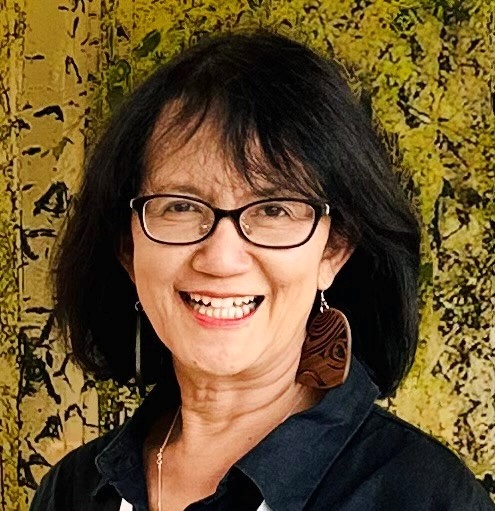
Professor Veronica Soebarto
University of Adelaide / School of Architecture and Built Environment
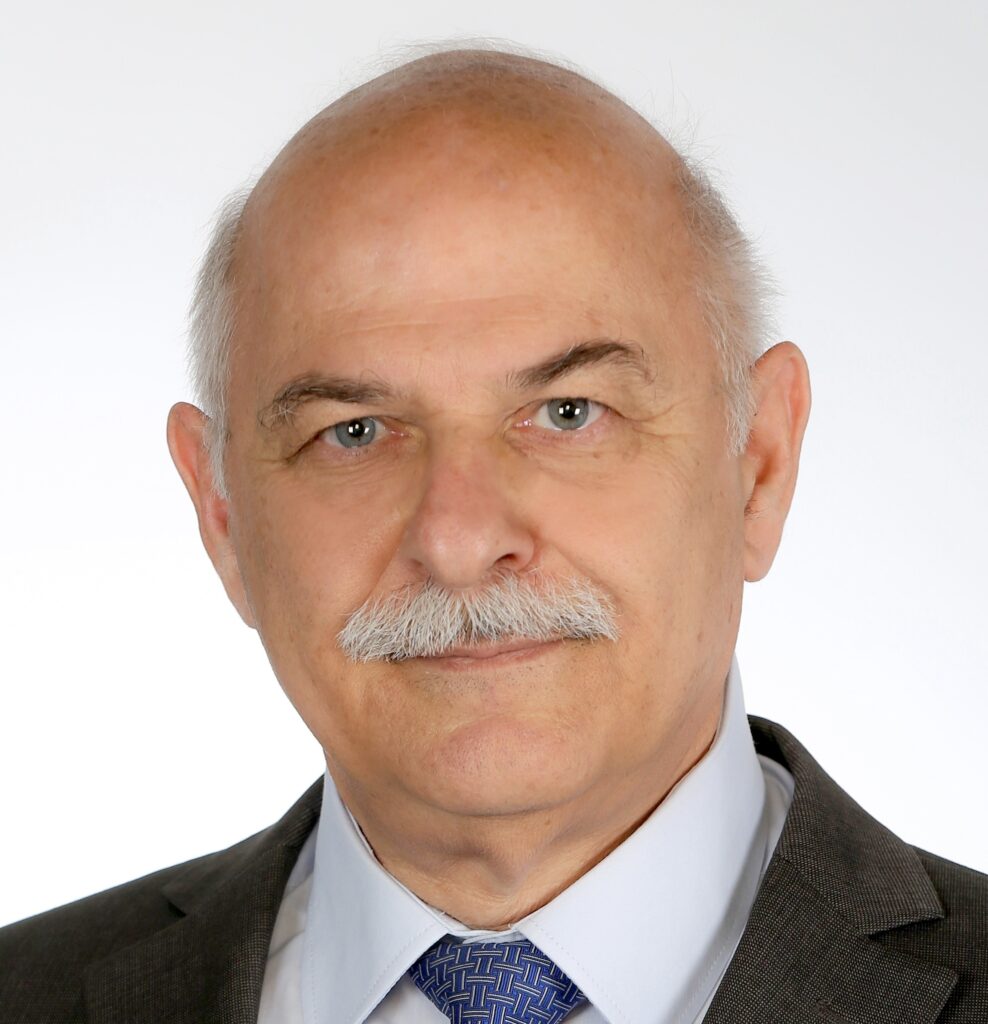
Professor Koen Steemers
BSc BArch MPhil
PhD LLD ARB
Bio
Christos Markides is Professor of Clean Energy Technologies at Imperial College London, Head of the Clean Energy Processes Laboratory, and leader of the Experimental Multiphase Flow Laboratory—the largest facility of its kind at Imperial.
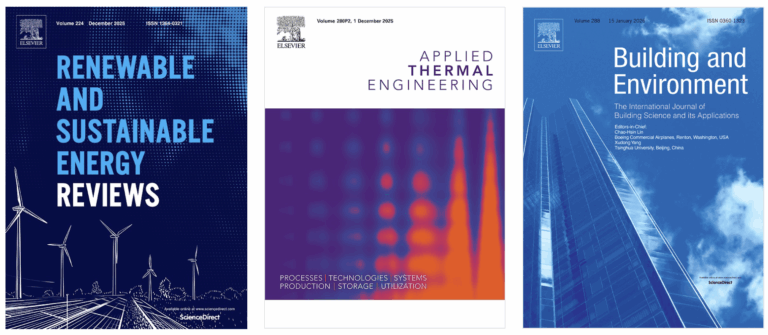
He serves as the Editor-in-Chief of Applied Thermal Engineering and the founding Editor-in-Chief of the new journal AI Thermal Fluids.
Professor Markides is internationally recognised for his work in applied thermodynamics, fluid flow, and heat/mass transfer within high-performance technologies for energy recovery, utilisation, and storage, with a strong focus on solar-thermal conversion.
He has authored more than 430 publications and several influential reviews and books, attracting over 20,000 citations (h-index 77). Recent highlights include:
– A review of solar hybrid photovoltaic-thermal (PV-T) collectors and systems
– High-efficiency bio-inspired hybrid multi-generation photovoltaic leaf
– Renewable and waste-heat utilisation technologies (Cambridge)
– Power generation technologies for low-temperature and distributed heat (Elsevier)
His contributions have been recognised with numerous awards, including:
– IChemE Global Clean Energy Medal (2025)
– IChemE Global Award for Best Research Project (2018)
– IMechE Donald J. Groen Outstanding Paper Prize (2016)
– Imperial College President’s Awards for Research Excellence (2017) and Teaching Excellence (2016)
He is also active in innovation and technology transfer as a founding Director of Solar Flow.
Bio
Veronica Soebarto is a Professor of Architectural Science at the School of Architecture and Civil Engineering, The University of Adelaide / School of Architecture and Built Environment, Adelaide University (from 2026). She is the Initiative Lead in Green Urban Futures and Planetary Health at the Environment Institute and Theme Lead in Sustainable Futures of Adelaide-Nottingham Alliance at the University. Her research interests span from age-friendly built environment, environmental performance assessments of buildings, building performance simulation, building monitoring, human thermal comfort, to the social dimension of sustainable design. She collaborates and publishes with researchers from various disciplines including in economics, social sciences, law, public health, and gerontology. She recently led 2 consecutive Discovery Projects, funded by the Australian Research Council (ARC), to investigate the thermal environment in homes of, and develop resilient housing for, older people in South Australia. She also leads CSIRO-funded project to address overheating and investigate occupant behavioural settings in a hot arid climate in Australia as well as co-leads an ARC Linkage Project to determine the social value of a mixed-use urban development. From 2026 she will be co-leading a new ARC Discovery Project to advance the integration of greenery and solar energy for buildings.
Veronica is an Associate Editor of Energy & Buildings and Solar Energy Advances. She is Fellow of Architectural Science Association and of the International Building Performance Simulation Association (she was the second recipient of IBPSA Outstanding Young Contributor Award, awarded in 1997). To date she has supervised more than 30 PhD students (25 completed).
Bio
Koen is the Professor of Sustainable Design at the Department of Architecture, University of Cambridge. He is an architect and built environment academic, was Head of Department from 2009-14, after five years as Head of Research. Together with four colleagues he directs of the ‘Behaviour and Building Performance’ (BBP) group of ca. 25 collaborators undertaking analysis at the intersection of the sustainable design, health, and neuroarchitecture. More recently he is co-director of a newly formed ‘NeuroCivitas Lab’ investigating how the built environment modulates psychophysiological processes – including perception, cognition, affect, and behaviour. He has been involved in £40m of funded research projects and has produced over 200 publications, including 10 books, with over 15000 citations (Google Scholar). Koen was awarded an honorary Doctor of Laws (LLD) “in recognition of his distinguished career and his international standing as one of the world’s experts on sustainable building design”.

Professor Zuo Wangda
ASHRAE and
IBPSA Fellow
Professor Soteris Kalogirou
Cyprus University of Technology
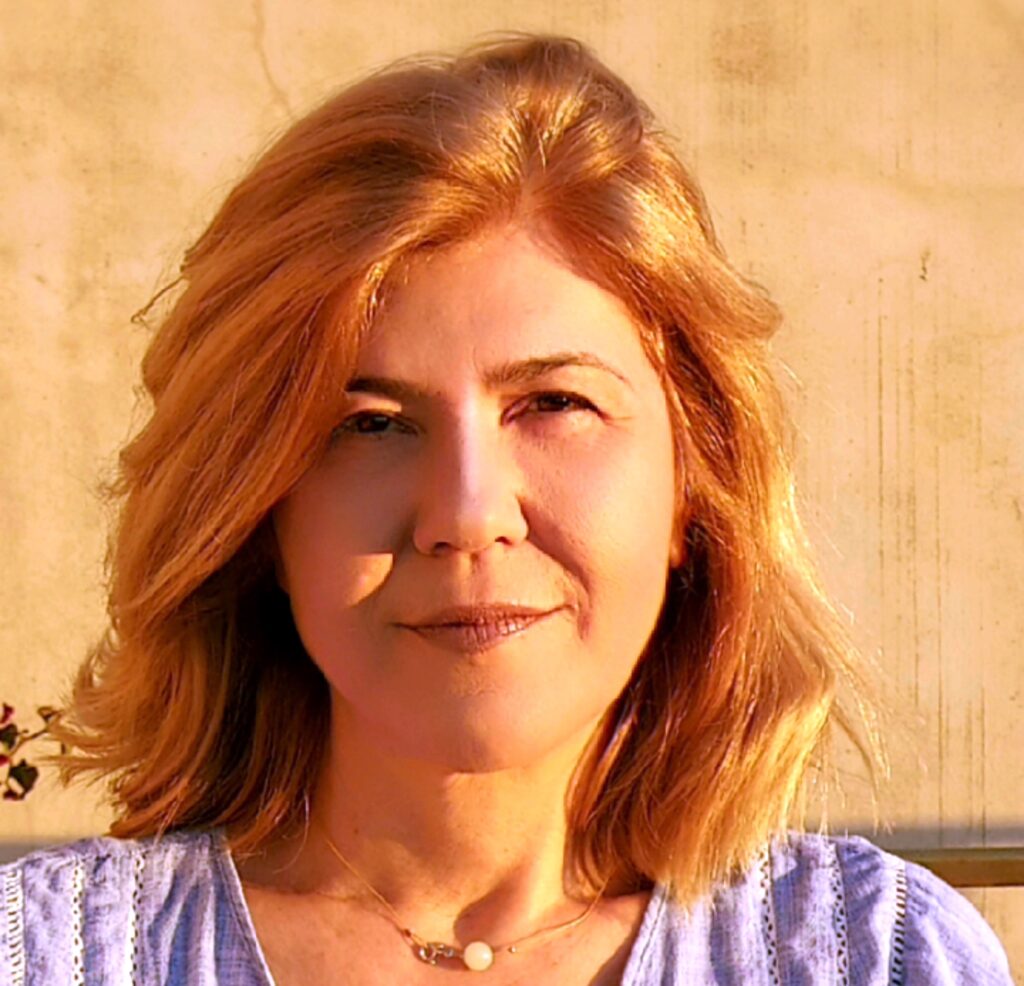
Professor Denia Kolokotsa
University of Crete
Bio
Zuo Wangda is a full professor in Architectural Engineering at Pennsylvania State University, USA. His lab has contributed to the development of several major open-source tools for building and community energy systems, including the Fast Fluid Dynamics (FFD) model, Lawrence Berkeley National Laboratory (LBNL)’s Modelica Buildings Library, and the National Renewable Energy Laboratory (NREL)’s URBANopt platform.
A former Research Scientist at LBNL, Professor Zuo currently holds a joint appointment at NREL and maintains extensive collaborations with multiple DOE national laboratories. He is a Fellow of both ASHRAE and IBPSA and has received numerous recognitions, including Penn State’s World Class Engineering Faculty Award, IBPSA Innovative Application Award, IBPSA-USA Emerging Professional Award and Outstanding Researcher Award, and ASHRAE’s Distinguished Service Award and Exceptional Service Award.
Professor Zuo has served as PI or Co-PI on more than 30 research projects sponsored by the NSF, DOE, DOD, and DHS, with total funding exceeding $19 million. He has supervised 20+ Ph.D. students and published more than 170 peer-reviewed papers, reflecting both scholarly impact and dedication to workforce development.
Bio
Professor Soteris Kalogirou is at the Department of Mechanical Engineering and Materials Sciences and Engineering of the Cyprus University of Technology, Limassol, Cyprus. In addition to his Ph.D., he holds the title of D.Sc. He is a Fellow of the European Academy of Sciences, Founding Member of the Cyprus Academy of Sciences, Letters and Arts, Member of Academia Europaea and Fellow of International Artificial Intelligence Industry Alliance.
For more than 35 years, he is actively involved in research in the area of solar energy and particularly in flat plate and concentrating collectors, solar water heating, solar steam generating systems, desalination, photovoltaics, geothermal energy and absorption cooling.
He has a large number of publications in books, book chapters, international scientific journals and refereed conference proceedings. He is Editor-in-Chief of Renewable and Sustainable Energy Reviews, Editor-in-Chief Emeritus of Renewable Energy and Honorary Editor of Energy, and Editorial Board Member of another twenty journals. He is the editor of the book Artificial Intelligence in Energy and Renewable Energy Systems, published by Nova Science Inc., co-editor of the book Soft Computing in Green and Renewable Energy Systems, published by Springer, editor of the book McEvoy’s Handbook of Photovoltaics, published by Academic Press of Elsevier and author of the books Solar Energy Engineering: Processes and Systems, and Thermal Solar Desalination: Methods and Systems, published by Academic Press of Elsevier.
Bio
Denia Kolokotsa is a Professor at the School of Chemical and Environmental Engineering at the Technical University of Crete, whose research focuses on promoting sustainability in the built environment, including buildings and urban spaces. Her work has advanced energy efficiency through key contributions in integrated energy management systems, zero-energy buildings and communities, and urban overheating mitigation using nature-based solutions and highly reflective materials. She has developed cutting-edge monitoring and control systems for buildings and districts, as well as innovative energy technologies and materials. Denia Kolokotsa has coordinated eight international research projects and serves as Editor-in-Chief of Solar Energy Advances (Elsevier), and as Subject Editor for Scientific Reports (Nature) and PLOS Climate. Her recent research emphasizes the integration of nature-based solutions in urban and building contexts, enriched by social, cultural, and digital innovations. She is committed to fostering healthy, climate-resilient urban environments aligned with the New European Bauhaus principles, emphasising the harmony between planetary ecosystems and the built environment.
Abstract submission
Submit your abstract before 1st January 2026 (final extended deadline: 15 February 2026).
Abstract template
Download our template here.
Full paper submission
Proceedings
The volume is indexed in Scopus.

Special Issues
Eligibility
Only papers that have not been previously presented at another conference or published in other conference proceedings or journals are eligible for submission.
Contact
For detailed and updated information, please contact: iczcbe2026@fct.unl.pt
REGISTRATION FEES
| Types of fee | Early bird fee (until 15/05/2026) | Normal fee (after 15/05/2026) |
| Student a,b | €150 | €200 |
| Full delegate a | €400 | €500 |
| Accompanying person c | €150 | €150 |
a) Each registered author may present up to two papers in total (oral and/or poster).
Regular Fees includes (non-student): Access to conference sessions, conference materials, coffee breaks, lunches, the welcome cocktail on 9 July, and the conference dinner on 10 July.
b) Full-time students (excluding postdoctoral researchers) must provide proof of full-time enrolment (a copy of a valid student ID or a letter from the Head of Department or Programme Director).
Student Fees includes: Access to conference sessions, conference materials, coffee breaks, lunches, and the welcome cocktail on 9 July.
Note: The conference dinner on 10 July is not included in the student fee.
c) Accompanying persons may not attend conference sessions. The accompanying-person fee covers only the welcome cocktail on 9 July and the conference dinner on 10 July. Please email the conference organizers to register an accompanying person.
Registration
To register for ZCBE 2026, please complete the online registration form.
Payment Methods
If a proforma invoice is required before payment, please email congressos@novaidfct.pt with participant details, registration category, and billing information (name, VAT number/tax ID, address).
Participants may pay the registration fee using one of the following methods. All payments must be made in EUR (€). Registration is confirmed only after full payment is received and validated.
1) Bank Transfer
Important: All bank transfer fees must be paid by the participant. Please ensure that bank charges are not shared (select OUR, not SHA).
Account holder
Associação para a Inovação e Desenvolvimento – NOVA ID FCT
Campus da Caparica, 2829-516 Caparica, Almada, Portugal
Tel.: +351 21 823 5386
Bank information
Bank: Millennium BCP
Address: Av. José Malhoa 27-C, 1099-010 Lisboa, Portugal
Tel.: +351 21 004 2407
Bank details
IBAN: PT50 0033 0000 4545 1886 7450 5
SWIFT/BIC: BCOMPTPL
Account number: 0000045451886745
NIB: 0033 0000 4545 1886 7450 5
Payment reference (mandatory)
Please include the following reference in the payment description:
ZCBE2026 – [Participant Full Name]
This reference is required to identify your payment.
Proof of payment
After completing the transfer, please email proof of payment to congressos@novaidfct.pt including the participant’s full name and registration ID (if available).
2) PayPal / Credit or Debit Card (via PayPal)
Participants may pay via PayPal using the payment link provided. PayPal also allows payment by credit/debit card, even without creating a PayPal account (subject to PayPal checkout availability).
Use the following PayPal payment link: https://www.paypal.com/paypalme/NOVAIDFCTConference
PayPal processing fee: To ensure the conference receives the full registration fee, please add 5% to payments made via PayPal.
Examples:
- Student fee (€150) → €157.50
- Full delegate fee (€400) → €420.00
If you need the PayPal payment link or assistance, please contact congressos@novaidfct.pt (include participant details and registration category).
Paying by credit/debit card without a PayPal account
Participants may also pay by credit/debit card via PayPal, without creating a PayPal account (guest checkout enabled, subject to PayPal checkout availability).
How to pay by card without a PayPal account
Open the PayPal payment request/link sent by email.
- Select the PayPalpayment option.
- On the PayPal page, choose “Pay with Debit or Credit Card”(or similar wording).
- Enter your card details and billing/contact information.
- If prompted to create a PayPal account, select “No, thanks”/ “Not now” (or similar wording), and complete the payment.
Invoices and receipts
Invoices/receipts are issued by the financial department (NOVA ID FCT). Please ensure the billing information provided during registration is complete and correct. For invoice-related questions or corrections, contact congressos@novaidfct.pt.
Registration confirmation
- All payments must be made in EUR (€).
- Registration is confirmed only after payment is received and validated.
- Bank transfers may take several business days to be received and processed.
IMPORTANT DATES
- Open for abstract submissions:
1 November 2025 - Deadline for abstract submissions:
31 December 2025 (extended to 15 February 2026) - Notification of abstract acceptance:
1 March 2026 - Deadline for full paper submission:
15 March 2026
- Notification of full paper acceptance:
15 April 2026 - Final paper submission for conference proceeding:
1 May 2026 - Deadline for early bird registration:
15 May 2026 - Conference: 8 – 10 July 2026
CONFERENCE CHAIRS



Laura Aelenei
National Energy and Geology Laboratory – LNEG
PORTUGAL
Yupeng (Jack) Wu
University of Nottingham
UK
Daniel Aelenei
NOVA University Lisbon
PORTUGAL
Mattia de Rosa
University of Genoa
ITALY
ORGANIZATION COMMITTEE
Helder Gonçalves, Susana Viana, David Loureiro, Henriqueta Teixeira, Filipe Barreira (LNEG, Portugal)
Evdokia Bairampa (Three o’clock, France)
Vicky Albert-Seifried (Fraunhofer ISE, Germany)
Joaquim Teixeira, Guilherme Coelho (NOVA FCT, Portugal)
Saveria Boulanger (University of Bologna, Italy)
SCIENTIFIC COMMITTEE (TO BE UPDATED)
Ana Rodrigues (NOVA SBE, Portugal),
Antonieta Cunha e Sá (NOVA School of Business and Economics – NOVA SBE, Portugal),
Carlos Santos Silva (University of Lisbon, Portugal)
Cristiana Croitoru (Technical University of Civil Engineering Bucharest – UTCB, Romania),
David Loureiro (LNEG, Portugal),
Enrico Mazzucchelli (Politecnico di Milano, Italy)
Eva Barreira (University of Porto – FEUP, Portugal)
Florin Bode (Technical University of Civil Engineering Bucharest – UTCB, Romania)
Guilherme Coelho (NOVA FCT, Portugal)
Henriqueta Teixeira (LNEG, Portugal)
Hugo Silva (NOVA FCT, Portugal)
Iva Pires (NOVA FCSH, Portugal)
Ivan Luque (IREC, Spain)
Jacopo Gaspari (University of Bologna, Italy)
Jan-Frederik Flor (Taylor’s University, Malaysia)
João Cardoso (LNEG, Portugal),
João Martins (NOVA FCT, Portugal)
João Pedro Gouveia (NOVA FCT, Portugal)
Jorge Facão (LNEG, Portugal)
José Dinis Silvestre (Instituto Superior Técnico, IST, Portugal)
Lia Marchi (University of Bologna, Italy)
Ligia Moga (UTCN, Romania)
Margarida Ortigão (NOVA SBE, Portugal)
Maria da Glória Gomes (Instituto Superior Técnico – IST, Portugal)
Maria João Brites (LNEG, Portugal)
Nuno Simões (Itecons, Universidade Coimbra, Portugal)
Paolo Civiero (Roma Tre University, Italy)
Paulina Faria (NOVA FCT, Portugal)
Radu Godina (NOVA FCT, Portugal)
Ricardo Martins (NOVA IMS, Portugal)
Rosa Romano (Università di Firenze – UNIFI, Italy)
Rui Lopes (NOVA FCT, Portugal),
Runqi Liang (University of Nottingham Ningbo, China)
Saveria Boulanger (University of Bologna, Italy)
Serena Orlandi (University of Bologna, Italy)
Sofia Simões (LNEG, Portugal)
Susana Viana (LNEG, Portugal)
Teresa Santos (NOVA FCSH, Portugal)
Tomas Horak (Czech Technical University, Czech Republic)
Vicky Albert-Seifried (Fraunhofer ISE, Germany)
Xiao Liu (Zhejiang University of Technology)
Xin Liu (University of Lincoln, UK)
Yang Ming (Southwest Jiaotong University, China)
Yanyi Sun (University of Kingston, UK)
Yilin Li (University of Shanghai for Science and Technology)
PRELIMINARY CONFERENCE PROGRAMME
8 July 2026 – Day 0
• 14:30–17:00 – Student Workshops on Net Zero Carbon Strategies
Specific content and invited instructors will be announced soon.
(Details on the workshop venue and room allocation will be provided closer to the date.)
9 July 2026 – Day 1
• 08:30–12:00 – Registration desk open
• 09:00–17:00 – Plenary and Parallel Sessions
• 17:30–19:00 – Networking Cocktail
10 July 2026 – Day 2
• 08:30–12:00 – Registration desk open
• 09:00–17:00 – Plenary and Parallel Sessions
• 17:00–17:30 – Closing Session
• 20:00 – Conference Dinner
(Times and details are subject to minor adjustments in the final programme.)
© ZCBE 2026